Scaffolding Components: Types, Functions and Uses in Construction
Published on 8 July 2026•By Prateek Nahar
Imagine standing at a busy construction site. You look up and see a massive framework wrapping around a tall concrete building. This secure working platform does not just magically appear. It requires strong scaffolding components to keep workers safe at high elevations. Every builder knows a project needs reliable access and structural stability to succeed. Selecting the right parts of scaffolding ensures safety and speed on site. This guide will explain different scaffold components, their exact functions and how to choose the best materials for your next project.
Looking for Scaffolding Components?Choose Stallion Exims
What Are Scaffolding Components?
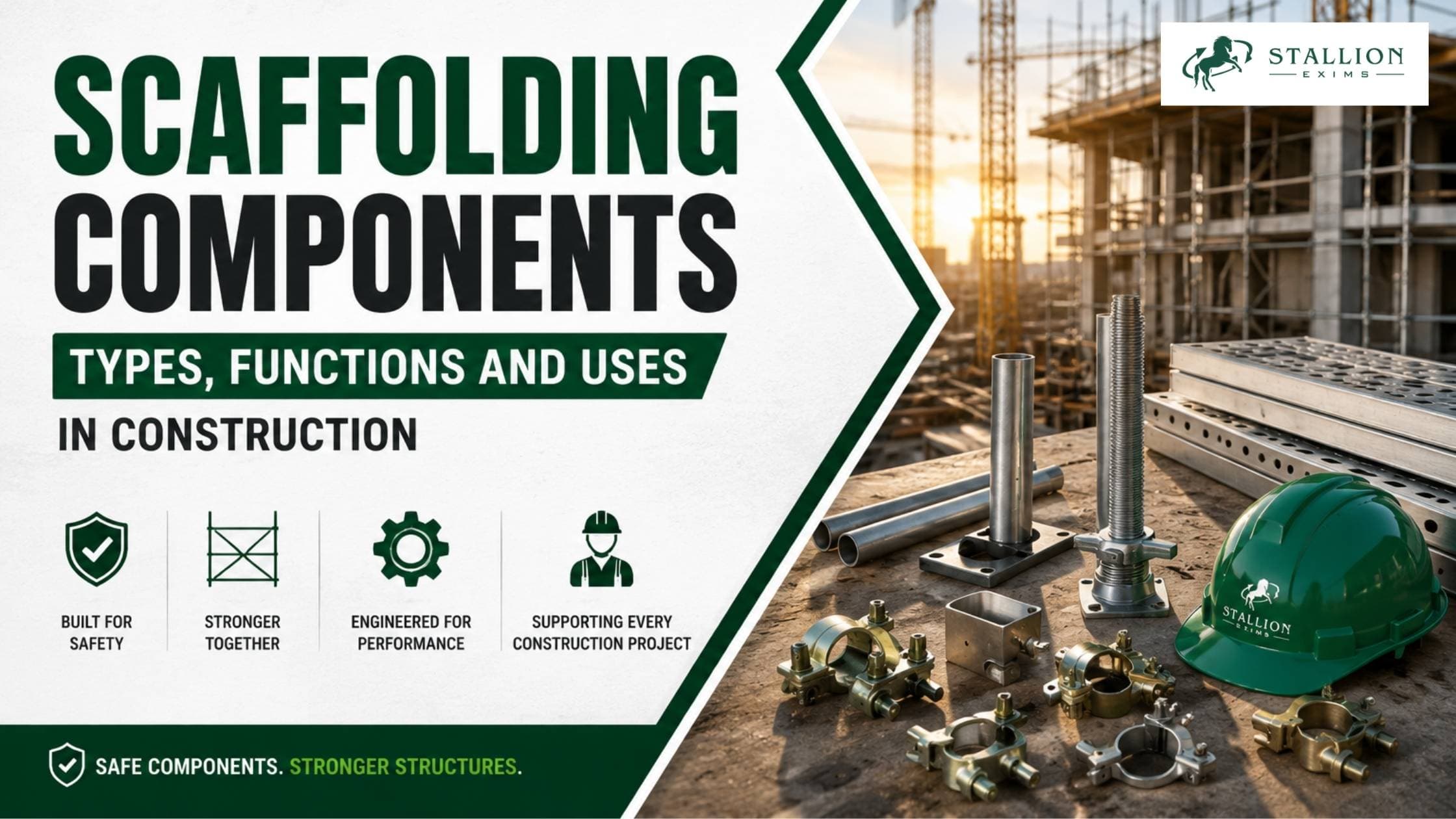
Scaffolding components are the individual structural pieces that fit together to build a temporary working platform. These scaffold parts include vertical tubes, horizontal supports, base plates and connection joints. Together these elements create a stable structure providing safe access for construction workers handling tasks at various heights.
Why Are Scaffolding Components Important?
Using high quality components of scaffolding is critical for any project. Here is why proper selection matters.
Worker Safety: Reliable scaffolding parts prevent falls and accidents. Height safety is the primary goal of any temporary structure.
Structural Stability: Strong components prevent the framework from shaking or collapsing under heavy weight.
Load Distribution: Quality materials spread out the weight of workers and equipment evenly across the platform.
Easy Assembly: A standard scaffolding parts list allows teams to build and dismantle the access platform quickly.
Construction Efficiency: Safe and sturdy steel scaffolding helps teams move faster and complete tasks on time.
Essential Scaffolding Components and Their Functions
Understanding scaffolding components names and functions helps project managers make better buying decisions. Here is a detailed look at the core items.
MS Cuplock Vertical
Definition: Also known as scaffolding standards this is the main upright steel pipe.
Function: It acts as the primary vertical member carrying the downward weight.
Importance: It forms the main backbone of any modular scaffolding.
Applications: Used in high rise buildings and heavy load support structures.
Safety Tips: Always ensure the tube stands perfectly straight.
Maintenance Tips: Inspect regularly for rust or bending.
Best Use Cases: Large scale construction sites requiring maximum load capacity.
MS Cuplock Ledger
Definition: The scaffolding ledger is a horizontal support pipe.
Function: It connects the vertical tubes together to form a rigid frame.
Importance: It adds horizontal stability and prevents the structure from swaying.
Applications: Connecting uprights and supporting the working platform.
Safety Tips: Lock every connection firmly to avoid loose joints.
Maintenance Tips: Keep the connecting ends clean and free of concrete buildup.
Best Use Cases: Creating grid frameworks for heavy concrete slabs.
Spigot Pin
Definition: A small connecting metal pin.
Function: It joins two vertical scaffold tubes end to end.
Importance: It ensures safe height extension without compromising strength.
Applications: Extending the height of towers and facades.
Safety Tips: Never use damaged pins to connect vertical pipes.
Maintenance Tips: Store in dry places to prevent corrosion.
Best Use Cases: Multi level building projects.
MS Adjustable Base Jack
Definition: A threaded base jack located at the bottom of the structure.
Function: It provides adjustable height leveling on uneven ground.
Importance: It ensures the entire temporary structure remains perfectly level.
Applications: Supporting upright tubes on rough construction sites.
Safety Tips: Do not extend the thread beyond its maximum safe limit.
Maintenance Tips: Lubricate the threads regularly for smooth adjustment.
Best Use Cases: Sites with sloping or uneven terrain.
MS Adjustable U Jack
Definition: A threaded jack featuring a U shaped top head.
Function: It holds horizontal beams securely at the top of the scaffolding.
Importance: It offers fine height adjustments for ceiling support.
Applications: Supporting roof slabs and large horizontal beams.
Safety Tips: Ensure beams sit perfectly centered inside the U shape.
Maintenance Tips: Clean off cement residue after every project.
Best Use Cases: Slab casting and heavy beam support.
Base Plate
Definition: A flat metal plate placed under the vertical tube. It acts similarly to a sole plate.
Function: It provides a solid foundation for the structure.
Importance: It stops heavy tubes from sinking into soft ground.
Applications: Placed directly on the ground before erecting vertical pipes.
Safety Tips: Always use a base plate on soil or soft surfaces.
Maintenance Tips: Check for cracks before reuse.
Best Use Cases: Ground level scaffolding foundation.
MS Planks and GI Planks
Definition: Steel planks or galvanized boards where workers walk.
Function: They create the actual horizontal working platform.
Importance: They provide a safe surface preventing slips and falls.
Applications: Placed over the scaffolding transom to form walkways.
Safety Tips: Secure them tightly so they do not slide under foot traffic.
Maintenance Tips: Keep surfaces clean of oil and mud.
Best Use Cases: Creating safe access walkways for painting or bricklaying.
Bracing
Definition: A diagonal brace tube fixed across the main framework.
Function: It connects different points to prevent the structure from twisting.
Importance: It greatly increases structural stability against wind and movement.
Applications: Fixed diagonally across vertical and horizontal members.
Safety Tips: Always install bracing exactly as engineered.
Maintenance Tips: Replace any tubes that show signs of buckling.
Best Use Cases: High elevation external scaffolding.
Couplers
Definition: Scaffolding accessories used to clamp two tubes together.
Function: They create strong connection points across the framework.
Importance: Proper couplers hold the entire system together safely.
Applications: Connecting ledgers, braces and standards.
Safety Tips: Tighten every clamp to the correct torque specification.
Maintenance Tips: Check bolt threads for stripping.
Best Use Cases: Custom access platform builds.
Double Coupler
Definition: A heavy duty clamp fixed at a precise right angle.
Function: It securely connects two scaffold tubes at 90 degrees.
Importance: It ensures maximum structural integrity for load bearing joints.
Applications: Joining vertical and horizontal pipes.
Safety Tips: Use only certified couplers for main structural joints.
Maintenance Tips: Oil the nuts to prevent seizing.
Best Use Cases: Main grid assembly.
Swivel Coupler
Definition: A flexible clamp that rotates.
Function: It connects two scaffold tubes at any required angle.
Importance: It enhances adaptability for complex structural shapes.
Applications: Attaching a diagonal brace to the main frame.
Safety Tips: Do not use swivel couplers for right angle load bearing.
Maintenance Tips: Ensure the swivel joint moves freely.
Best Use Cases: Installing cross bracing.
Putlog Coupler
Definition: A specific clamp for horizontal tubes.
Function: It connects scaffold tubes to horizontal putlogs.
Importance: It provides essential support for walking platforms.
Applications: Fixing board supports to ledgers.
Safety Tips: Ensure even spacing across the platform.
Maintenance Tips: Inspect flaps for bending.
Best Use Cases: Supporting steel planks.
Sleeve Clamp
Definition: An external joining clamp.
Function: It connects two tubes end to end from the outside.
Importance: It ensures secure and straight joints.
Applications: Joining pipes where an internal spigot pin cannot be used.
Safety Tips: Ensure both tubes meet perfectly inside the clamp.
Maintenance Tips: Keep the inner surface clean for tight grips.
Best Use Cases: Extending non standard pipe lengths.
Board Clamp
Definition: A small retaining clip.
Function: It secures walking boards to the framework.
Importance: It ensures the platform stays stable under heavy movement.
Applications: Locking down MS Planks and GI Planks.
Safety Tips: Clip boards securely at both ends.
Maintenance Tips: Replace bent clamps immediately.
Best Use Cases: High wind areas where boards might lift.
Girder Coupler
Definition: A heavy duty clamp designed for structural steel.
Function: It connects the temporary framework directly to steel girders.
Importance: It provides extreme strong support for heavy loads.
Applications: Securing scaffolding to existing steel building frames.
Safety Tips: Always use in pairs for maximum grip.
Maintenance Tips: Check for deep rust before use.
Best Use Cases: Industrial bridge and factory construction.
MS Toeboard
Definition: A low protective steel edge barrier. It functions alongside the guard rail.
Function: It stops tools or materials from sliding off the platform edge.
Importance: It protects workers walking below the scaffold.
Applications: Attached to the outer edges of the walking platform.
Safety Tips: Ensure no gaps exist between the board and the floor.
Maintenance Tips: Fix any dents that compromise straightness.
Best Use Cases: Multi level projects above public spaces.
Aluminium Ladder and Ladder Clamp
Definition: An access ladder and its specific securing clamp.
Function: It allows workers to safely climb between different platform levels.
Importance: It provides secure and approved vertical access.
Applications: Secured to the scaffold frame at designated access points.
Safety Tips: Always lock the ladder firmly using a ladder clamp.
Maintenance Tips: Inspect ladder rungs for damage daily.
Best Use Cases: Internal access points within tower scaffolding.
How All Scaffolding Components Work Together
Building a safe access platform is a team effort. Every part has a specific job. First you lay down the base plate and insert the base jack to create a level foundation. Next you stand the MS Cuplock Vertical pipes up and connect them using an MS Cuplock Ledger. This forms the starting frame.
To give the frame stiffness you attach a diagonal brace using a swivel coupler. Then you lay MS Planks across the ledgers to create a safe working platform. Finally you install an MS Toeboard and guard rail to prevent items from falling off the edge. When all scaffolding parts work in harmony the structure can easily handle extreme construction demands safely.
How to Choose High Quality Scaffolding Components
Selecting the right parts directly impacts project safety. Keep these factors in mind.
Material Quality: Look for high grade steel that can handle heavy impact.
Load Capacity: Ensure parts can carry the specific weight of your materials.
Corrosion Resistance: Choose parts with good galvanization to stop rust.
Compatibility: Buy parts that fit perfectly with your existing systems.
Safety Standards: Only use products that meet international safety rules.
Supplier Selection: Partner with a global exporter like Stallion Exims for quality assured products.
Common Mistakes to Avoid While Selecting Scaffolding Components
Many buyers make easily avoidable errors when buying scaffold components. The biggest mistake is mixing parts from different unknown brands. This creates weak joints. Another error is choosing cheaper painted parts instead of galvanized parts for wet environments. Finally buyers often ignore the weight limits of their base jacks which can cause the entire structure to sink.
Maintenance Tips for Scaffolding Components
Proper care extends the lifespan of your equipment. Clean all steel scaffolding parts immediately after removing them from the site to prevent cement from hardening on the joints. Store pipes and couplers in a dry area to prevent rust. Always lubricate threaded accessories like base jacks and double couplers. Before every new project inspect spigot pins and planks for cracks or serious damage.
Why Choose Stallion Exims for Scaffolding Components?
Finding a reliable supplier for scaffolding components is crucial for large construction projects. Stallion Exims is a leading international export partner specializing in high quality scaffolding components and building materials. As a global exporter we provide bulk supply solutions for contractors and builders worldwide.
When you source scaffolding components from Stallion Exims you receive quality assured products designed for extreme durability. We understand international shipping logistics making sure your materials arrive safely and on time. With competitive pricing and a strong global network Stallion Exims is the preferred choice for construction companies needing a dependable supply chain.
Final Thoughts
Building a strong temporary structure requires deep knowledge of scaffolding components and functions. From the base jack to the steel plank every piece plays a vital role in keeping construction workers safe. Selecting high quality materials protects your team and improves construction efficiency. Always partner with a reliable supplier to ensure you receive parts that meet global safety standards.
Ready to source premium scaffolding materials for your next big project? Contact Stallion Exims today for reliable bulk supply and worldwide shipping solutions.
Frequently Asked Questions
1. What are the basic components of scaffolding?
Scaffolding consists of vertical standards, ledgers, diagonal braces, base jacks, base plates, steel planks, guard rails, toe boards and couplers. Together these components create a safe and stable working platform for construction and maintenance projects.
2. Can scaffolding components be reused?
Yes. High quality steel scaffolding components can be reused many times if they are cleaned, properly stored and inspected after every project. Damaged or corroded parts should never be reused.
3. Which scaffolding component supports the maximum load?
The Cuplock Vertical (Standard) is the primary load-bearing component in a scaffolding system. It transfers the weight of workers, materials and the scaffold structure safely to the base through the base jack and base plate.
4. What is the difference between a base jack and a base plate?
A base jack adjusts the scaffold height on uneven ground, while a base plate distributes the load evenly to create a stable foundation. Both components work together to support the scaffold safely.
5. Which scaffolding component provides the most stability?
Diagonal braces provide the most structural stability by preventing the scaffold from swaying or twisting. They work together with verticals and ledgers to keep the scaffold rigid under load.