13 Types of Scaffolding Used in Construction: A Complete Guide
Published on 17 June 2026•By Prateek Nahar
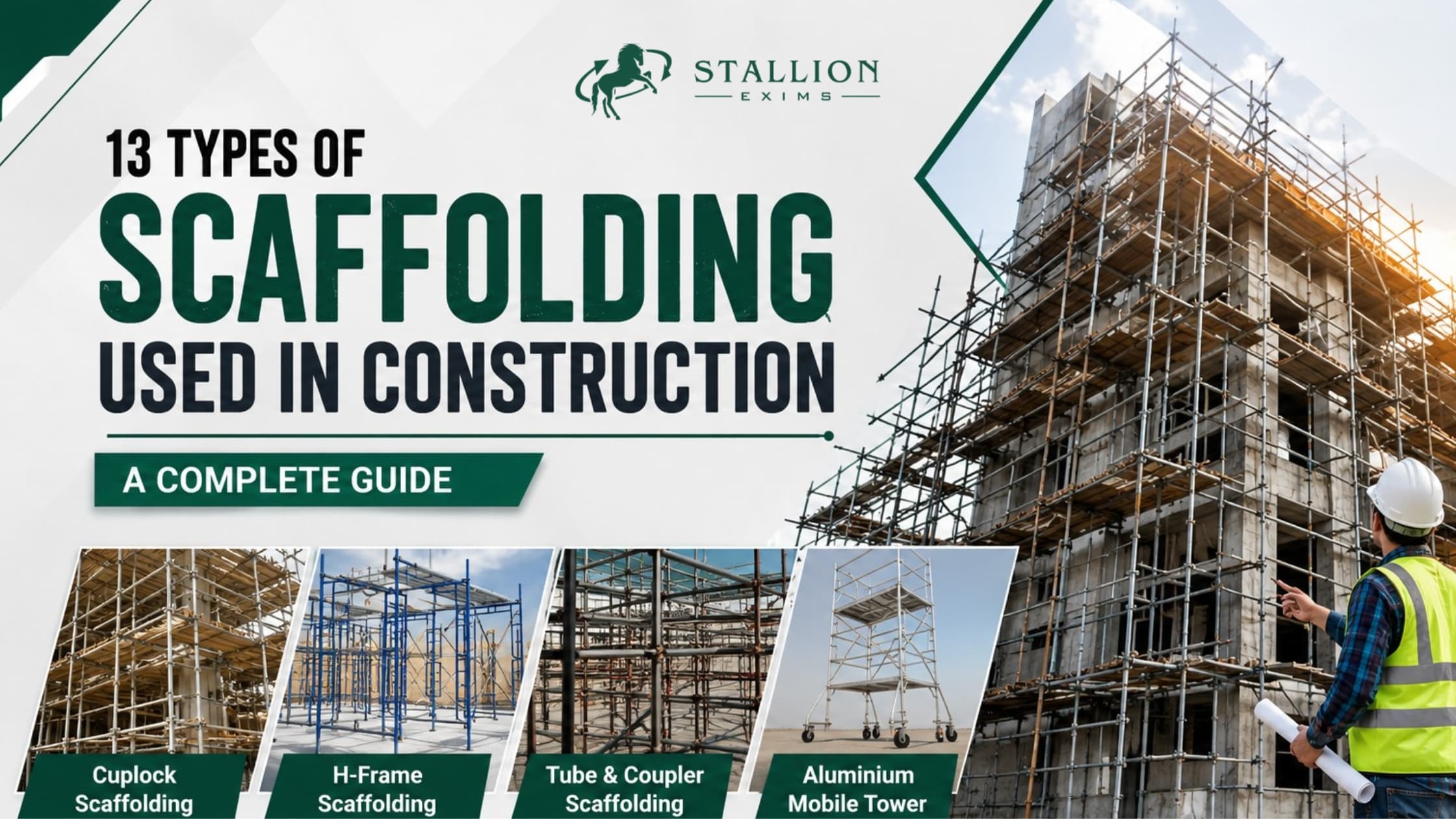
Choosing the wrong scaffolding type can slow down a project, raise costs and put workers at risk. People often ask how many types of scaffolding actually exist on a real construction site and the honest answer is more than most expect. There are over a dozen different types of scaffolding used across the industry today and each one suits a different kind of job. Some scaffold types work best for low rise residential buildings. Others are built for tall commercial towers or irregular structures that need flexible support. This guide breaks down 13 types of scaffolding in construction, how each one works and where it fits, so you know which scaffolding to use before your next project starts.
Looking for the Right Scaffolding System?Choose Stallion Exims
Traditional Scaffolding Types
Single Scaffolding
Single scaffolding is also known as bricklayer scaffolding. It uses one row of vertical standards placed close to a wall, connected by horizontal ledgers and tied into the building through putlogs. Workers use this type mostly for brick masonry jobs where the wall itself can take some of the load. Standards usually sit around 1.2 meters from the wall, spaced 2 to 2.5 meters apart along the run. It is simple to set up but not strong enough for heavy or tall structures, which is why most crews now reach for steel system scaffolds instead once a job goes beyond a couple of storeys.
Double Scaffolding
Double scaffolding, sometimes called independent scaffolding, uses two rows of standards instead of one. The wall does not need to bear any weight, which makes this type a common choice for stone masonry where drilling into the wall is not practical. It costs more to build than single scaffolding but offers far better stability, especially on taller walls. Cross bracing between the two rows keeps the whole frame from leaning under load, which matters once workers start stacking materials on the platform.
Cantilever Scaffolding
Cantilever scaffolding sticks out from a building rather than rising straight up from the ground. Crews use it when the ground below cannot hold standards, when space near the structure is limited or when only the upper part of a wall needs work. A needle beam, often braced on every side, carries the load instead of ground supports.
Suspended Scaffolding
Suspended scaffolding hangs from the top of a structure using ropes, wires or chains rather than standing from the ground. It works well for tasks on tall buildings, such as cleaning or painting, where building a full scaffold from ground level would cost too much time and money. The platform can be raised or lowered as the job moves along.
Trestle scaffolding rests on movable ladders or tripods instead of fixed standards. It suits light indoor work, such as painting a room or fixing a ceiling, usually up to about five meters high. Since the legs can be adjusted, workers can change the height quickly without rebuilding the whole setup.
Pump Jack Scaffolding
Pump jack scaffolding uses adjustable brackets that move up and down vertical poles, much like a car jack. It is common for siding, painting and roofing work on homes and small buildings. The system is affordable and easy to adjust for different heights, though it works better for lighter loads than heavy duty system scaffolding.
Core Scaffolding Systems for Modern Construction
Cuplock Scaffolding System
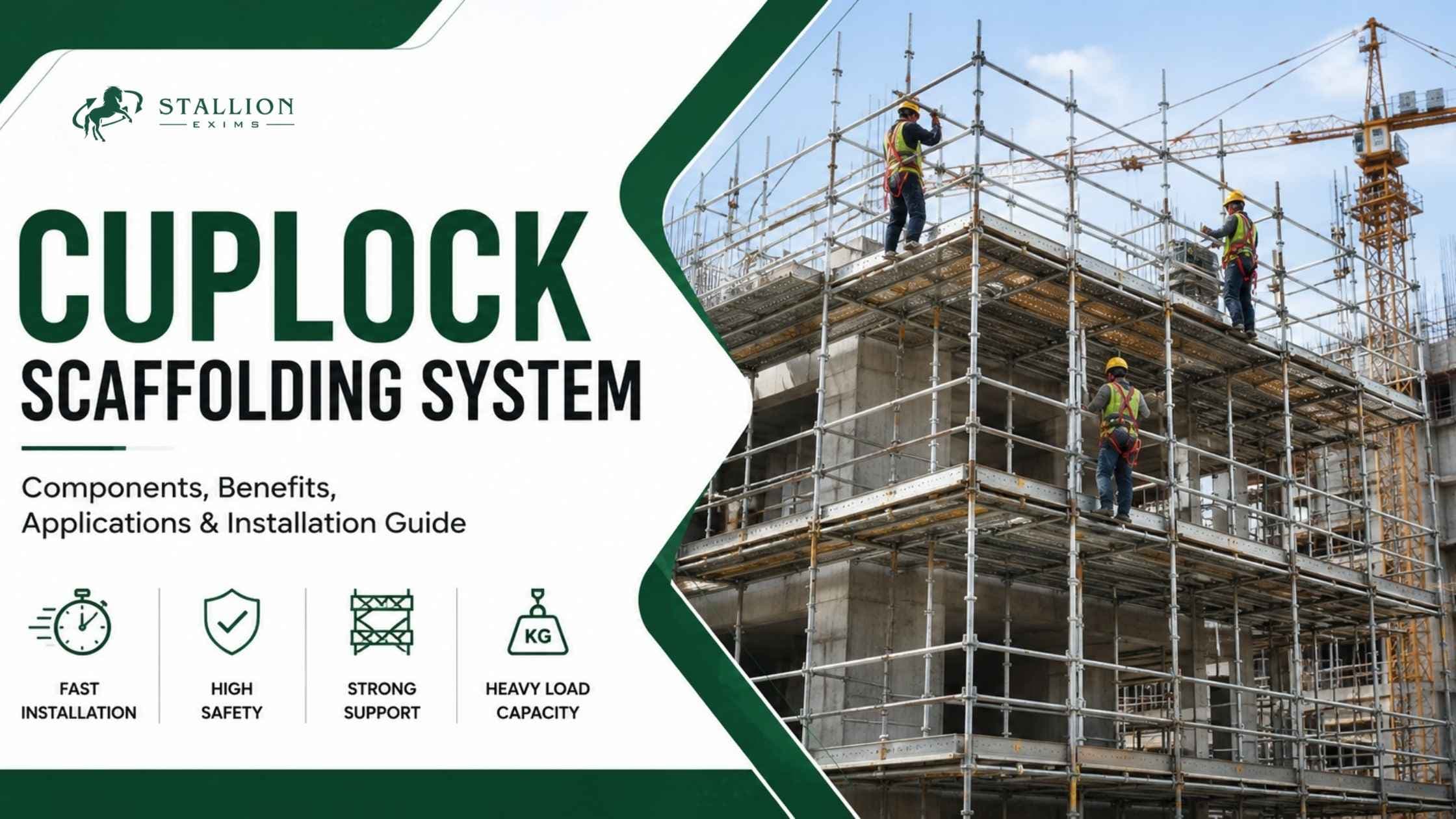
The cuplock scaffolding system is one of the most widely used setups in construction today and for good reason. Its standards come fitted with locking cups spaced at regular intervals along the tube, usually every 500mm, which lock ledgers into place with a single hammer strike. This cuts down both labor time and the number of loose fittings needed on site. Because of its strength and simple assembly, cuplock works well on everything from residential buildings to large industrial sites and even curved structures, since ledgers can lock in at almost any angle. It also ranks among the most reliable choices for scaffolding for high rise construction, where load capacity matters more than speed alone. Crews handling facade work, staircases or shoring setups often reach for cuplock first. For projects that demand fast turnaround without sacrificing load capacity, this scaffolding system for construction projects remains hard to beat.
H-Frame Scaffolding
H frame scaffolding gets its name from the H shaped panels that stack on top of each other, connected by cross braces and locking pins. As a modular scaffolding system, it goes up and comes down quickly without needing a highly trained crew, which is why builders favor it for low rise residential and light commercial work. Each frame locks into a fixed position, so there is less room for assembly mistakes compared to tube based systems. Planks rest across the frames to create a working platform and additional frames simply stack higher when more height is needed. It is not the strongest option for very tall or heavy load structures, but for straightforward jobs, few systems beat its speed and ease of use.
Tube and Coupler Scaffolding
Tube and coupler scaffolding, sometimes called tube and clamp, is built from straight steel tubes joined together using separate coupler fittings. Right angle couplers connect horizontal and vertical tubes, while swivel couplers handle diagonal bracing for added stability. This makes tube and coupler scaffolding one of the most flexible systems available, since tubes can be placed wherever a project needs them. Builders rely on it for irregular shaped buildings, heritage structures and industrial plants where a fixed frame system simply will not fit the geometry. Setting it up takes longer than modular systems since every joint is fitted separately, but that flexibility is exactly why many contractors still choose it for complex sites.
Aluminium Mobile Tower
An aluminium scaffolding toweris a freestanding unit built on wheels, allowing workers to roll it from one spot to another without dismantling the structure. Since aluminium weighs far less than steel, the tower assembles and moves quickly, which suits jobs like painting, electrical work or maintenance where the working position shifts often. Locking wheel brakes hold the tower steady once it reaches the right spot, keeping workers safe while they work above ground. These towers usually reach moderate heights and carry lighter loads compared to heavy steel systems, so they are not meant for major structural work. For light duty tasks that move across a site, though, this option saves real time.
Other Scaffolding Types Worth Knowing
Ringlock Scaffolding
Ringlock scaffolding uses a rosette system welded onto standards, allowing up to four braces and ledgers to lock into one point with a single pin. It handles complex shapes well, including curved or angular structures and sees frequent use in industrial and offshore projects. Where cuplock relies on stacked cups, ringlock spreads connections around a single rosette plate, which gives crews more angles to work with on tight or unusual layouts.
Kwikstage Scaffolding
Kwikstage scaffolding works much like cuplock but uses V shaped fittings instead of cups. Crews value it for how fast it goes up, since there are fewer loose parts to manage during assembly. It is common on mid sized commercial and industrial jobs and many contractors in Australia and South Africa treat it as their default system for general access work.
Mast Climbing Scaffolding
Mast climbing scaffolding runs on a fixed vertical mast anchored to the ground, with a motorized platform that moves up and down. It suits projects with heavy loads or limited ground space, since the footprint stays small no matter how high the platform climbs. Bricklayers and façade crews on tall buildings often prefer it over traditional system scaffolding because materials can be loaded directly onto the platform at any height, cutting down on manual lifting.
Shoring and Formwork Support
A scaffolding shoring system supports wet concrete until it hardens into a solid slab, rather than supporting workers at height. Builders use vertical props, often paired with horizontal spans, to hold formwork in place beneath floors, beams and other cast in place concrete elements. These props can be adjusted to different heights depending on floor to floor distance and they get removed once the concrete cures enough to support its own weight. Shoring systems carry significant load, so using props rated for the right capacity matters more here than almost anywhere else in scaffolding work. On large commercial projects, shoring often goes up and comes down multiple times across different floors before a building tops out.
Which Scaffolding Type Should You Choose
Different projects call for different systems and matching the two correctly saves both time and money. The table below offers a quick starting point.
Project Type
Recommended Scaffolding System
High rise commercial construction
Cuplock System
Low rise residential building
H-Frame Scaffolding
Irregular or curved structures
Tube and Coupler Scaffolding
Frequent repositioning, light tasks
Aluminium Mobile Tower
Concrete slab and beam formwork
Shoring System with Props
This is not an exhaustive list and many sites end up combining two or three systems depending on what each section of the project demands. Still, starting with the right base system makes every other decision on-site easier.
Sourcing Scaffolding That Matches Your Project
Picking the right type is only half the job. The other half is getting equipment that holds up under real site conditions, since even the best scaffolding system fails fast if the components are weak, poorly galvanized or out of spec. Stallion Exims supplies cuplock systems, H-frame scaffolding, tube and coupler setups, MS props and aluminium mobile towers for construction projects of every scale. Whether you are sourcing for a single site or planning bulk supply across multiple locations, reach out to our team to discuss what your project needs.
Frequently Asked Questions
1. Which scaffolding type is best for high-rise construction?
Cuplock scaffolding is usually the preferred choice for high-rise projects because it offers high load capacity, stability and faster installation.
2. What is the most commonly used scaffolding system today?
Cuplock scaffolding is one of the most widely used systems due to its strength, versatility and quick assembly.
3. Which scaffolding works best for irregular building shapes?
Tube and coupler scaffolding is often the best option because it can be adjusted to fit complex and unusual structures.
4. Is aluminium scaffolding suitable for heavy construction work?
No. Aluminium mobile towers are mainly used for maintenance, painting and light-duty tasks where frequent movement is required.
5. Can different types of scaffolding be used on the same project?
Yes. Many construction sites use a combination of scaffolding systems depending on the work area and project requirements.