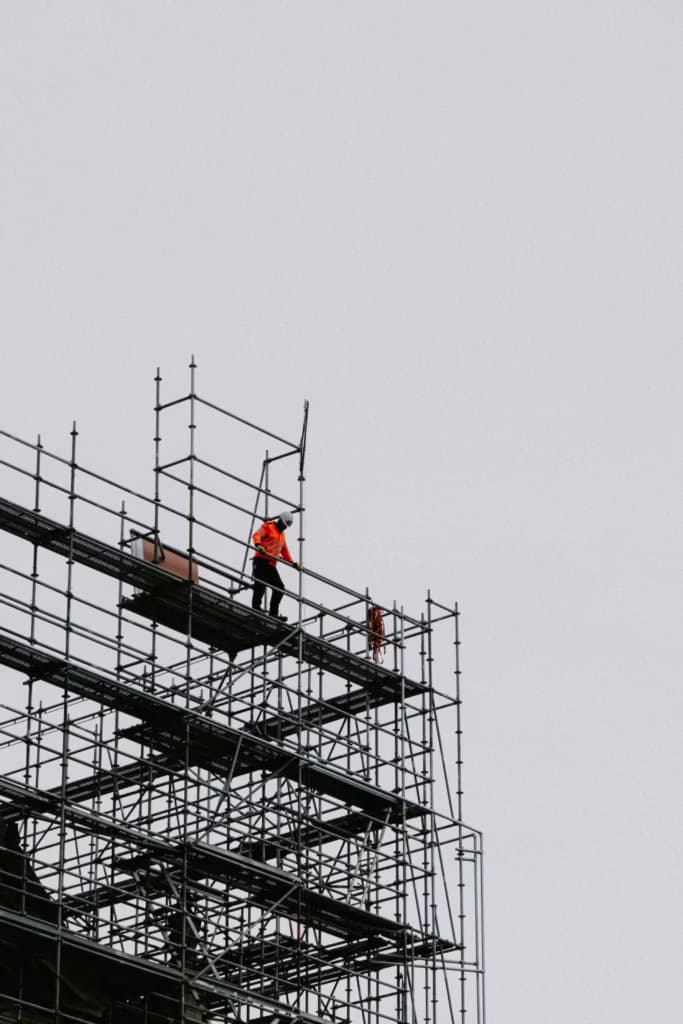
What Is Scaffolding in Construction? Types, Components and Uses
Published on 8 June 2026•By Prateek Nahar
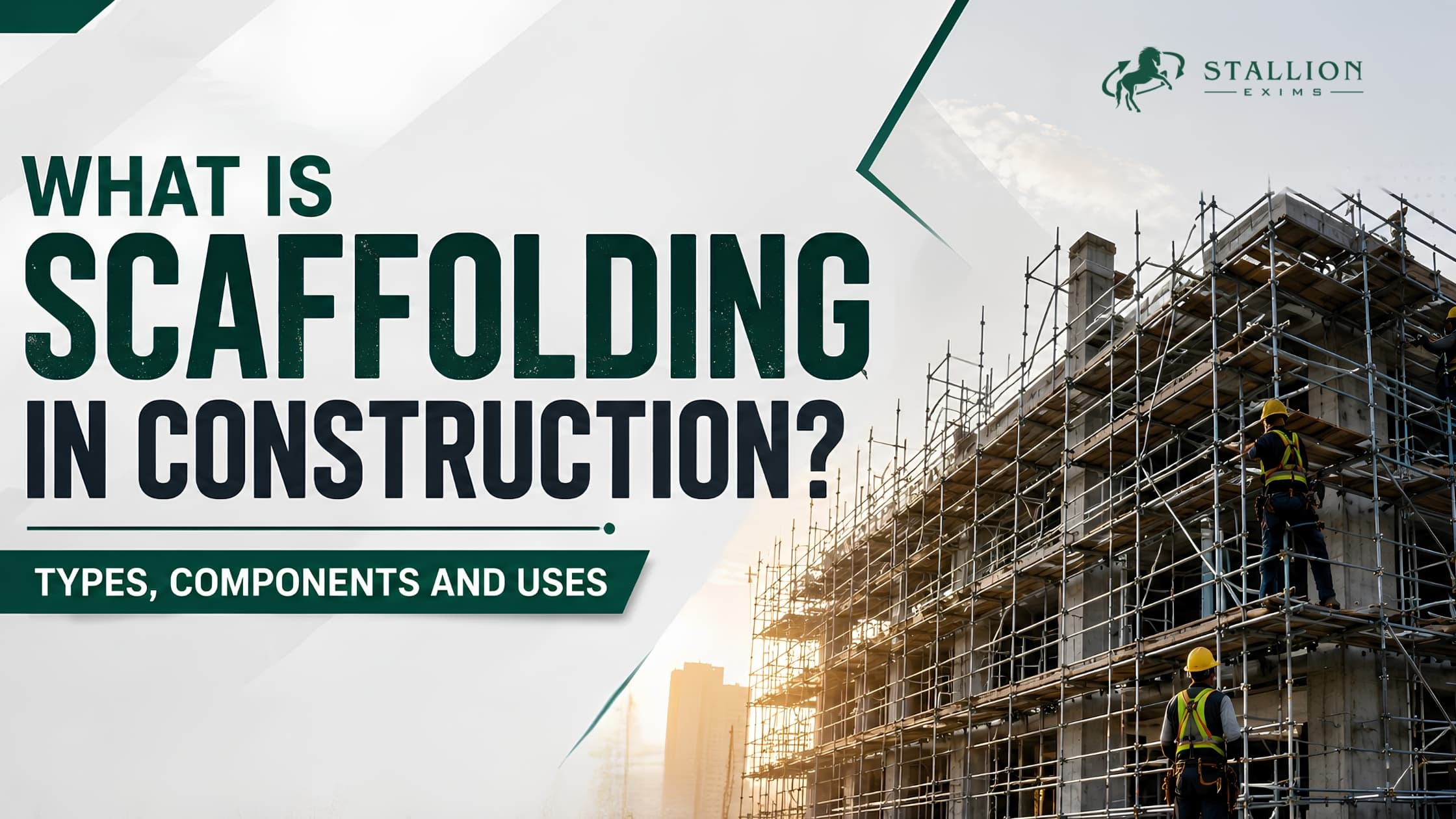
Look at any active construction site and the first thing you notice is that steel framework climbing up alongside the building. It goes up before the real work begins and comes down only after everything is finished. Most people walk past it without a second thought. But on site, that temporary structure is what keeps the whole operation moving safely.
Scaffolding in construction is not just about reaching height. It is about giving workers a stable, safe and productive environment to do precise work at elevation. Whether it is a five-storey residential block or a large industrial facility, no serious project at height moves forward without a proper scaffolding system in place.
This guide covers everything you need to know about scaffolding, from what it is and how it works to the main types used across the industry and why getting it right matters so much.
What Is Scaffolding?
Scaffolding is a temporary elevated structure built to support workers, tools and materials during construction, renovation or maintenance work on buildings and other structures. It gives operatives a firm platform to stand on at whatever height the job demands.
What is scaffolding in practical terms?
It is a system of steel tubes, boards and connecting fittings assembled in a specific configuration to create a safe working environment above ground level. Once the project is complete, it is dismantled and the components are reused on the next job.
It is used across new builds, refurbishment projects and ongoing maintenance work. The form it takes changes depending on the structure, the height involved and the type of work being carried out. But the core purpose stays the same every time: give workers safe, reliable access at height.
Why Scaffolding Is Important in Construction
Height is inherently dangerous on a construction site. Working at elevation without a proper access solution increases the risk of falls, makes material handling difficult and leads to poor quality work because operatives cannot position themselves properly.
A well-designed scaffolding system solves all of that at once. It gives workers a level surface to stand on, space to place their tools and materials nearby and enough room to move across the face of a structure without constantly climbing up and down. That combination improves both safety and output on site.
There is also a quality argument. A bricklayer working from a solid scaffold platform will always produce better results than someone stretching from a ladder trying to reach a section of wall. Same task, completely different working conditions. Scaffolding makes precision work possible at height.
From a programme perspective, scaffolding also enables multiple trades to work at different levels simultaneously. That parallel working reduces project time and keeps costs under control. It is one of those things that looks like an overhead on paper but saves money through the life of a project.
Main Components of a Scaffolding System
A scaffolding system is built from several distinct components, each playing a specific role in the overall structure. Here is what goes into a standard scaffold setup.
Standards
Standards are the vertical steel tubes that run from ground level upward. They carry the entire load of the scaffold structure down to base plates sitting on the ground. Everything else connects to or hangs off these vertical members. They are the primary load-bearing element of any scaffold.
Platforms
Platforms are the horizontal working platforms where operatives stand and carry out their work. They sit across horizontal tubes called ledgers and must be wide enough to allow safe movement and strong enough to carry the rated working load. Edge protection is fitted around platforms to prevent falls.
Braces
Braces are diagonal tubes fitted across the scaffold frame to give it lateral stability. Without bracing, a scaffold can rack or lean under load. Braces lock the structure into a rigid, stable shape and are essential on any scaffold of meaningful height.
Scaffolding Couplers
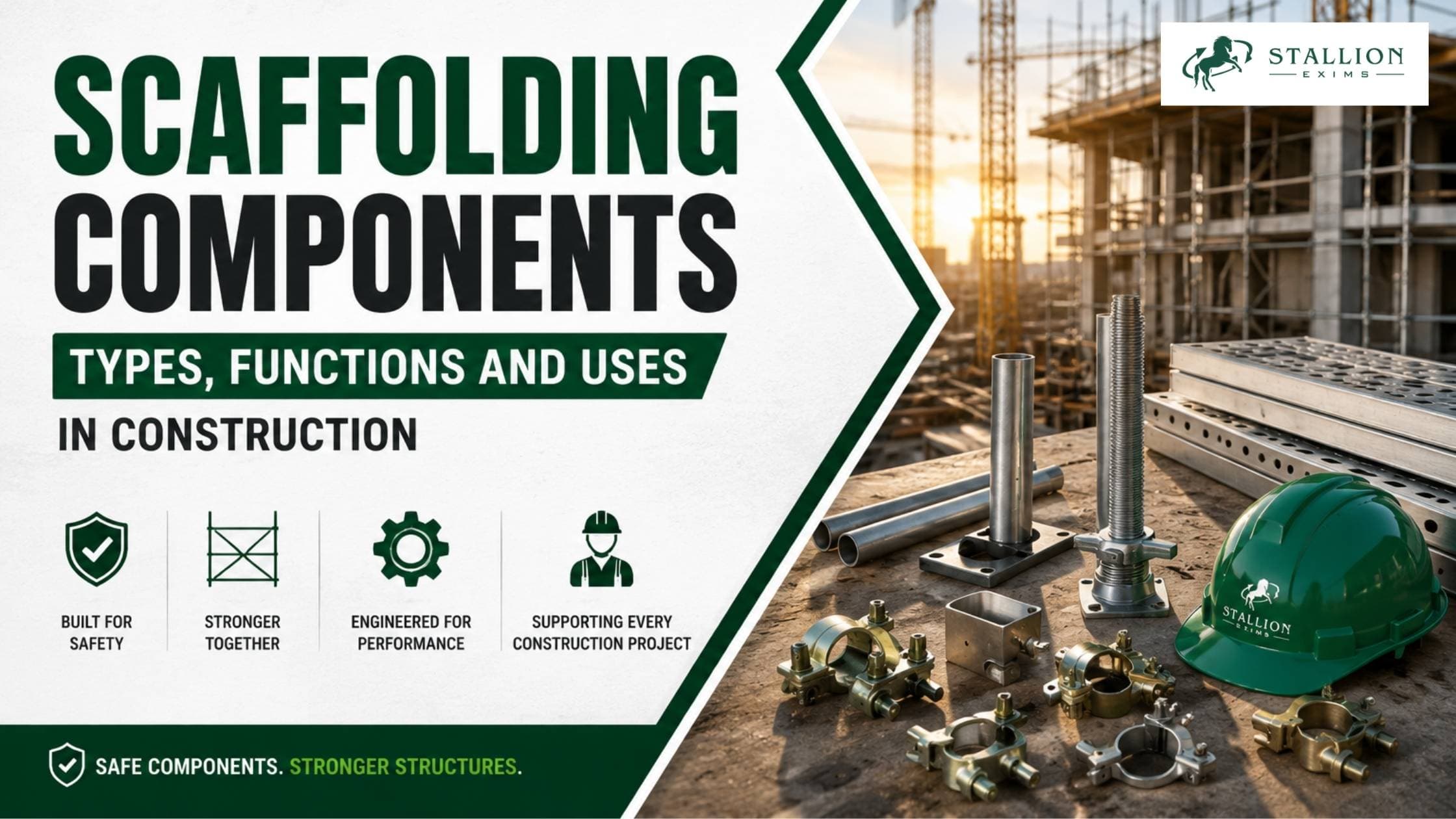
Scaffolding couplers are the steel fittings that connect one tube to another. Right-angle couplers join tubes at 90 degrees. Swivel couplers allow connection at other angles. Putlog couplers fix shorter tubes to horizontal ledgers. These small components carry significant structural loads and are critical to the integrity of the whole scaffold. Using worn or damaged scaffolding couplers is a real safety risk that should never be ignored.
Scaffold Fittings
Beyond couplers, scaffold fittings include base plates, sleeve joints, spigots and toe board clips. Each fitting completes a specific connection or adds a layer of safety to the overall assembly. Quality scaffold fittings make the structure faster to build and safer to use throughout the project.
Common Types of Scaffolding Used in Construction
Different projects call for different scaffolding solutions. Here is a brief overview of the four main types used across the industry.
Supported Scaffolding
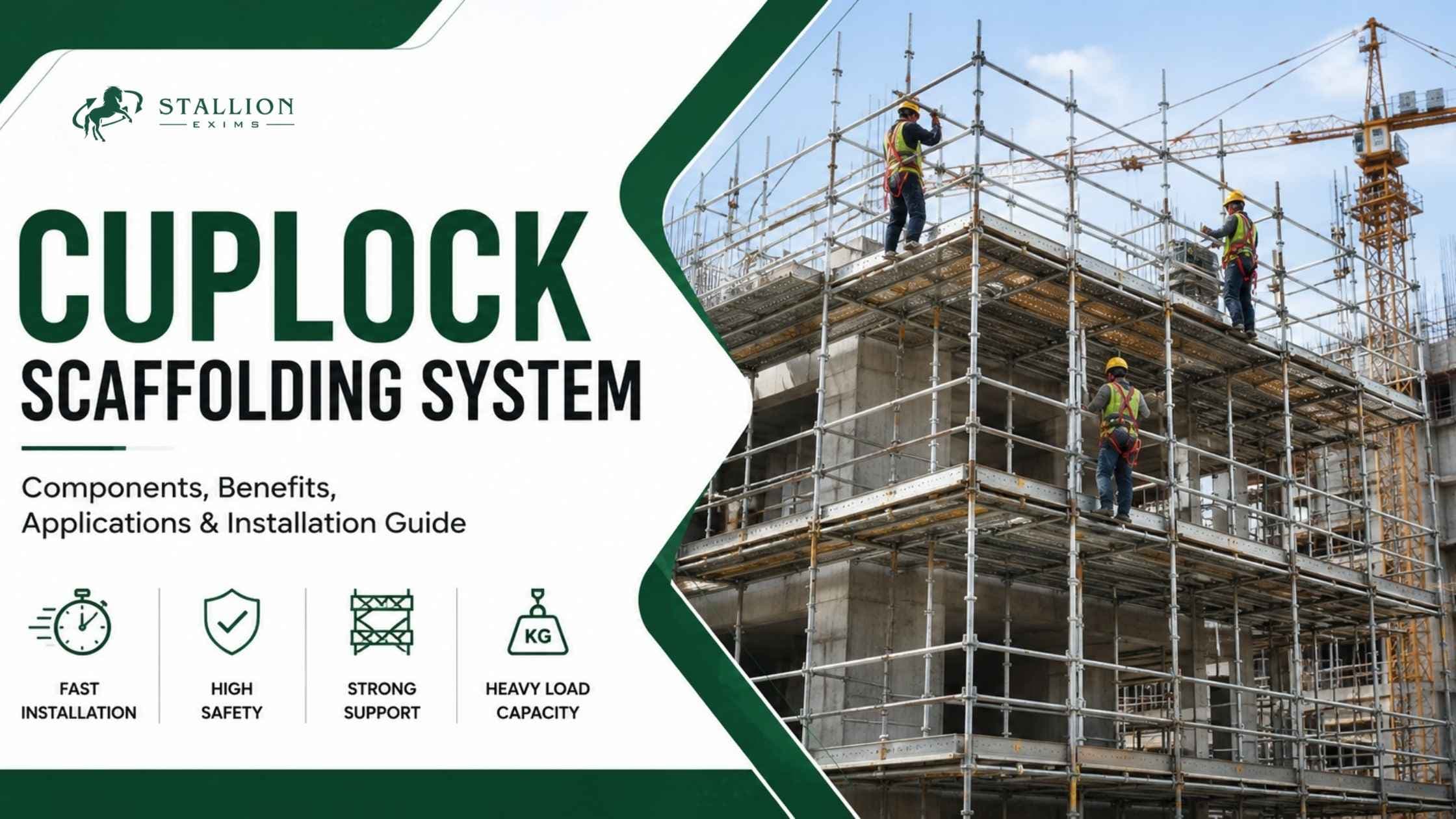
Supported scaffolding is built from the ground upward. It uses vertical standards, horizontal ledgers and diagonal braces to create a freestanding structure that rises alongside the building. This is the most common type on construction sites because it is strong, stable and adaptable to most project shapes and heights.
Suspended Scaffolding
Suspended scaffolding hangs from above rather than rising from the ground. Ropes, cables or steel outriggers fixed to the top of a structure hold the working platform in position. It is used where ground access is not possible, such as on the external face of a high-rise building or underneath a bridge.
Steel Scaffolding
Steel scaffolding uses galvanised or treated steel tubes and fittings throughout the structure. It is the industry standard for most commercial and industrial construction work because steel handles heavy loads reliably and performs well across all weather conditions. Most large-scale construction scaffolding on serious projects is steel-based.
Tube and Coupler Scaffolding
Tube and coupler scaffolding is assembled using individual steel tubes connected by scaffolding couplers rather than prefabricated frames. It takes longer to erect but offers far greater flexibility in configuration. It is the go-to solution for irregular buildings, heritage structures and sites where a standard modular system cannot be adapted to fit the geometry involved.
Dedicated guides covering each of these types in detail are being published as part of this series.
Where Scaffolding Is Commonly Used
Scaffolding appears across almost every sector of the construction and maintenance industry. New residential builds use it during brickwork, rendering and roof installation. Commercial projects use it for facade work, curtain wall installation and external finishes. Industrial facilities use scaffolding during planned shutdowns for maintenance, inspection and repair work at height.
Heritage restoration projects often rely on tube and coupler scaffolding because of how well it adapts to old or irregular structures. Bridge maintenance, stadium construction, offshore platforms and power station outages all have their own specific scaffolding requirements shaped by height, access restrictions and load demands.
Scaffolding is not only for new construction either. Any time an existing building needs external work done, whether that is repainting, waterproofing, cladding repair or window replacement, scaffolding goes up first.
Benefits of Using Scaffolding Systems
The practical value of a proper scaffolding system goes well beyond basic access to height.
Workers on a stable platform are more focused and more productive. They are not managing their balance or worrying about their footing. They can concentrate on the actual task. Materials staged at the right level cut down on lifting and trips. Multiple operatives can work across the same scaffold simultaneously without getting in each other's way.
Steel scaffolding systems are also reusable across many projects. Good quality tubes, scaffold fittings and couplers last for years when properly maintained and stored. The investment in quality components pays back across multiple builds.
Work quality also improves when working conditions are right. Precision trades like plastering, tiling and pointing all perform better from a solid platform than from a ladder or an improvised access solution.
Importance of Scaffolding Safety
Scaffolding safety is a legal requirement and a professional obligation. Falls from height remain one of the leading causes of serious injury and death in construction. A poorly designed or badly maintained scaffold is a direct contributor to that risk.
Every scaffold must be inspected by a competent person before workers use it for the first time. After that, inspections must happen at minimum every seven days and after any weather event, such as high winds, heavy rain or storm conditions, that could affect the structure's stability. Each inspection must be formally recorded.
Scaffold fittings and scaffolding couplers should be checked every time they are reused. Bent threads, cracked bodies and heavy corrosion are all reasons to remove a fitting from use rather than put it back on a scaffold. One failed connection point can put the whole structure and everyone on it at risk.
Platform overloading is another common cause of scaffold incidents. Every platform has a rated load capacity. Going beyond that limit, even briefly, creates risk that is entirely preventable.
Scaffolding safety starts with good design, runs through careful erection and does not stop until the final tube comes down and goes back into the yard.
Conclusion
Scaffolding rarely gets the credit it deserves, but it underpins almost every construction project that involves work at height. Understanding what scaffolding is, how its components work together and which system fits a given project is practical knowledge with real value on site and in the office.
Get the system right, use quality components, erect it properly and inspect it regularly. That is what keeps workers safe, projects on schedule and finished work at the standard it needs to be.
The next guides in this series look at specific scaffolding types, coupler selection, load considerations and scaffolding safety standards in greater depth.
Build Safer and StrongerScaffolding Systems with Stallion Exims
Reliable scaffolding performance starts with quality components. Stallion Exims supplies durable scaffolding couplers, scaffold fittings and steel scaffolding products designed for demanding construction and industrial applications.
From tube and coupler scaffolding setups to heavy-duty construction support systems, every component plays a critical role in structural stability and worker safety on site.
Explore our scaffolding product range to find dependable solutions for commercial construction, infrastructure projects and industrial maintenance work.
Frequently Asked Questions
1. What is scaffolding and what is it used for?
Scaffolding is a temporary elevated structure built from steel tubes, boards and fittings to give workers a safe platform to carry out construction, renovation or maintenance work at height. It is used across new builds, refurbishment projects and ongoing maintenance on all types of structures.
2. What are the main types of scaffolding used in construction?
The most common types are supported scaffolding, suspended scaffolding, steel scaffolding and tube and coupler scaffolding. Each type is suited to different project conditions, heights and access requirements.
3. Why are scaffolding couplers important to scaffold safety?
Scaffolding couplers are the connection points between tubes in a scaffold structure. They carry significant loads and hold the whole system together. Damaged or worn couplers reduce the structural integrity of the scaffold and must be replaced before reuse.
4. How often does scaffolding need to be inspected on site?
Scaffolding must be inspected before first use, at least once every seven days during active use and after any weather event that could affect its stability. Inspections must be carried out by a competent person and recorded in a formal register.
5. When should tube and coupler scaffolding be used instead of a modular system?
Tube and coupler scaffolding is the better choice for projects involving irregular structures, heritage buildings or complex geometries where standard modular frames cannot be configured to fit the site conditions. It takes longer to erect but gives far more flexibility in how the scaffold is designed and built.